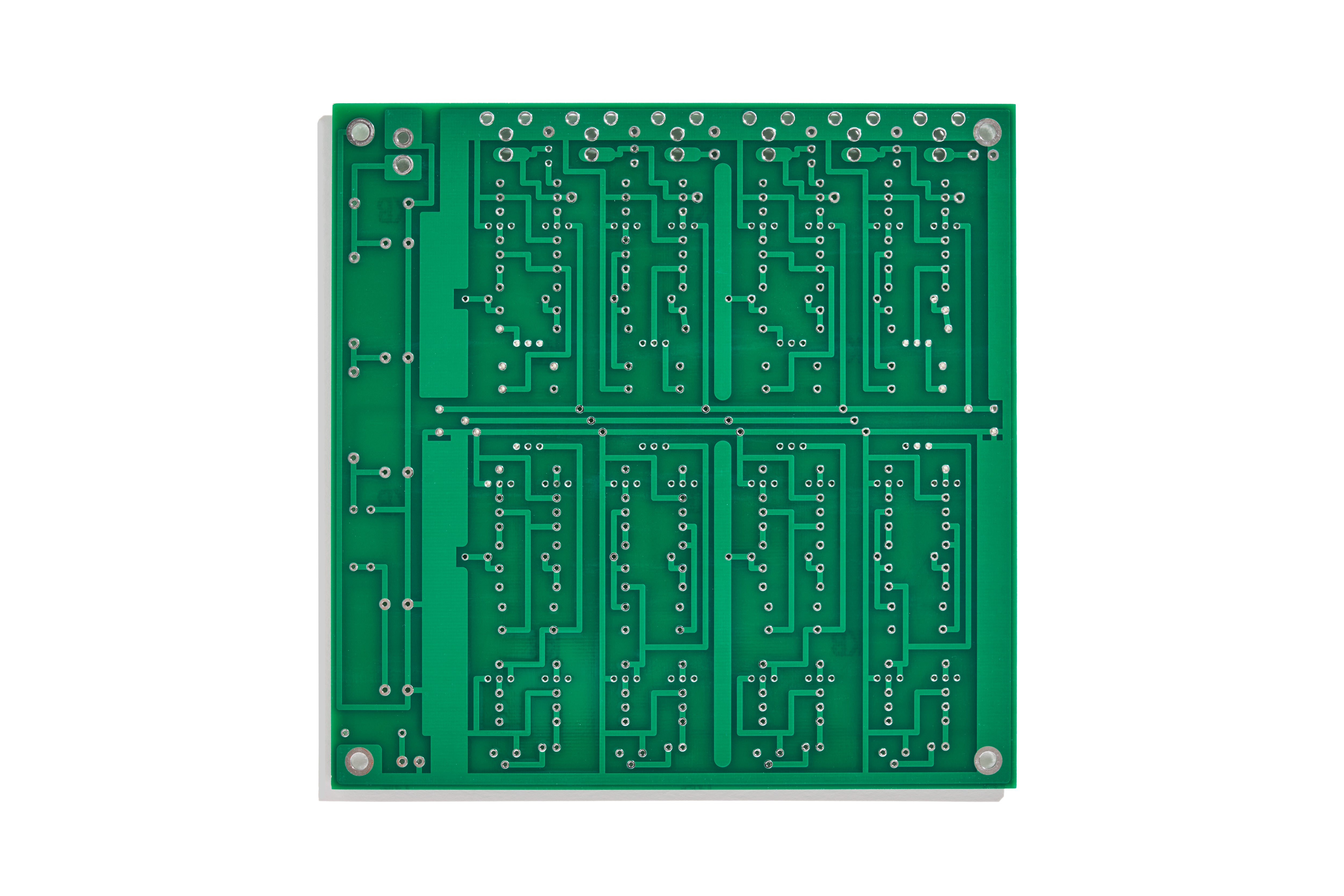
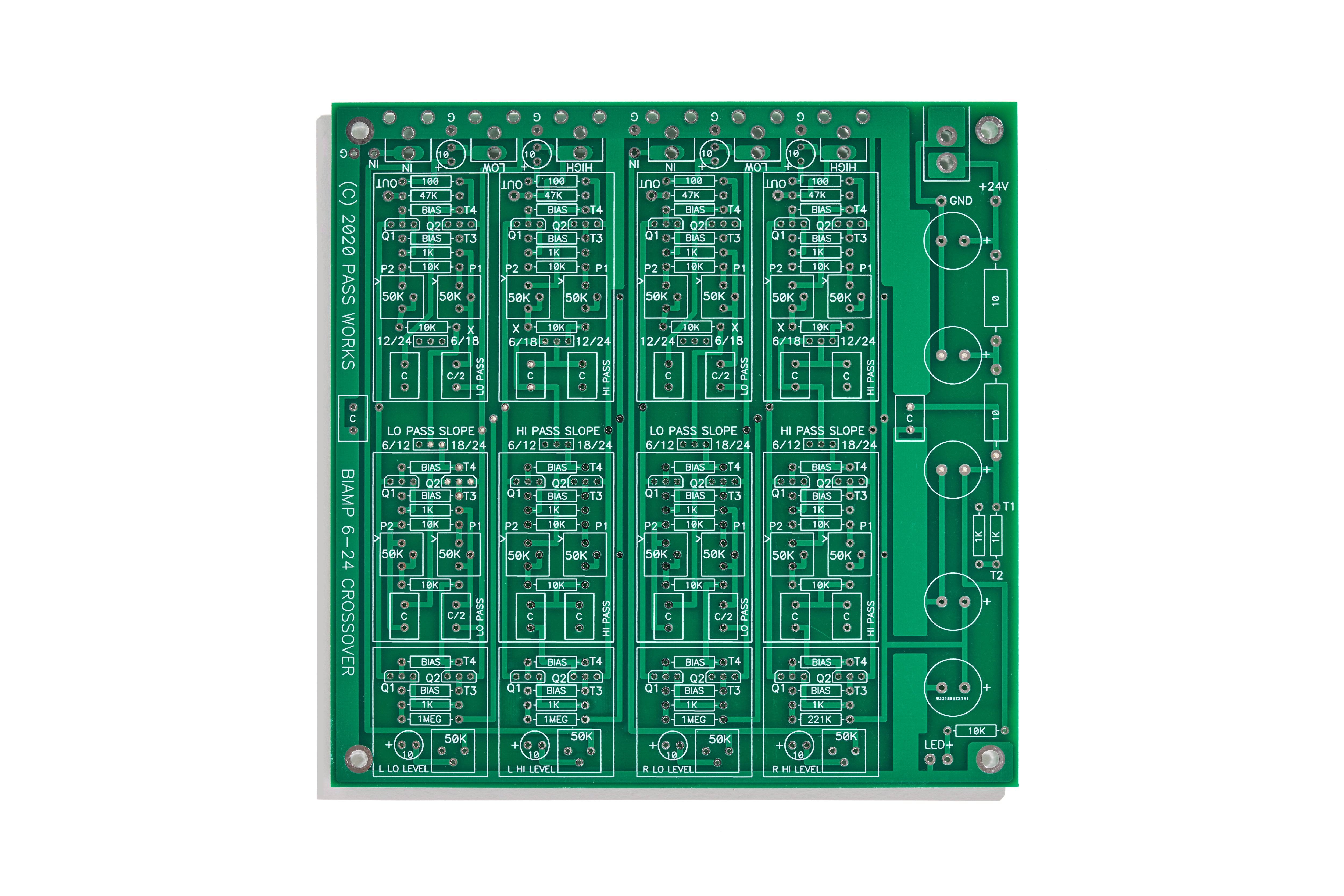
DIY Biamp 6-24 Crossover
- Description
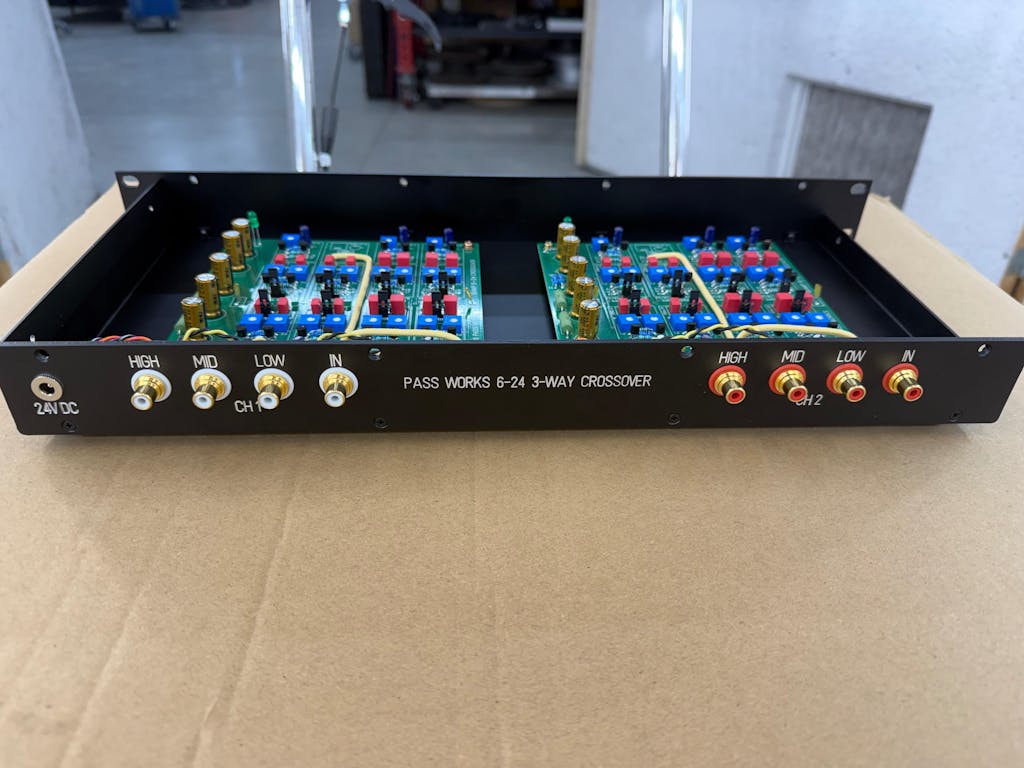
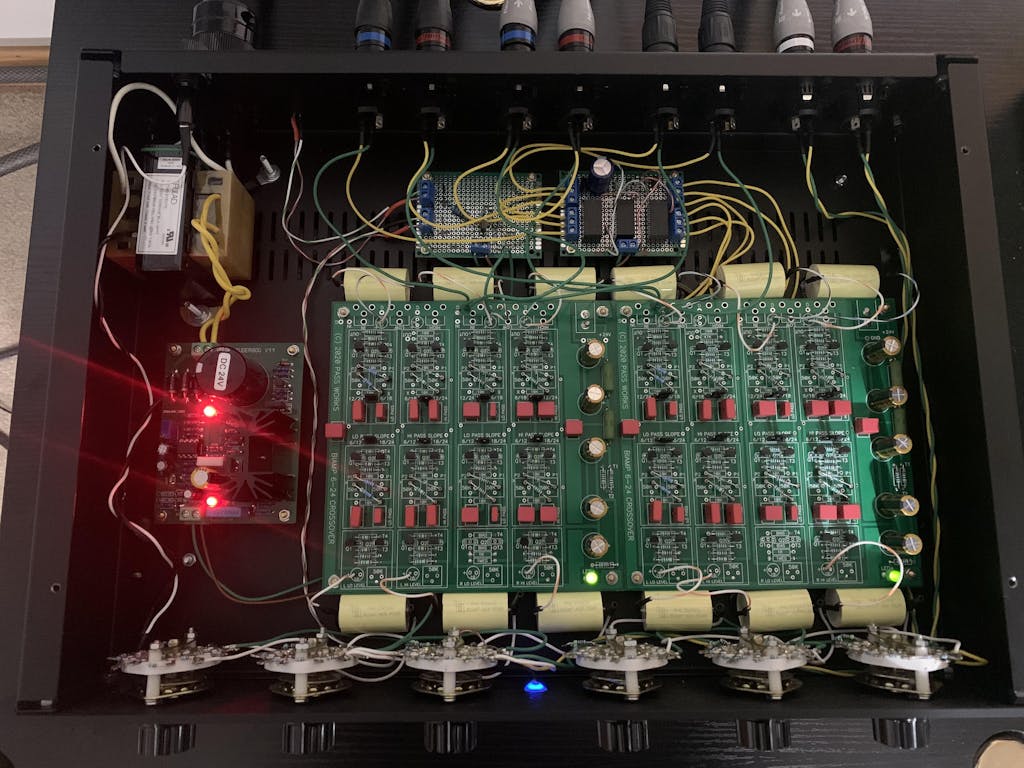
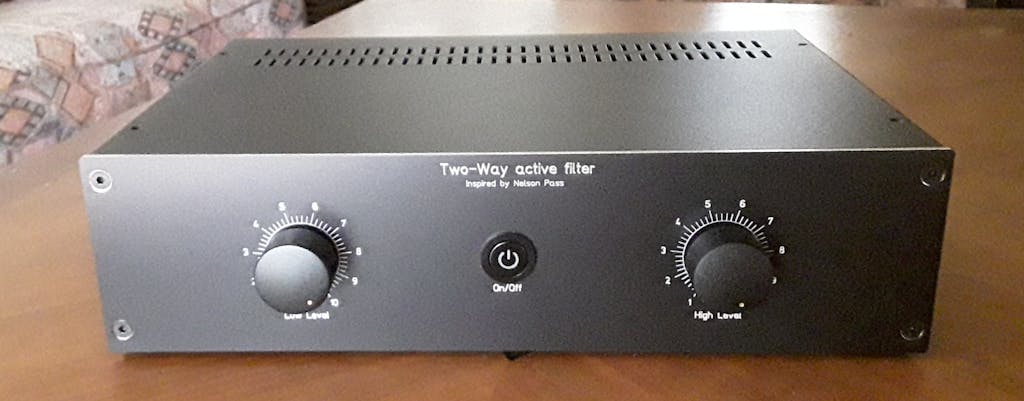
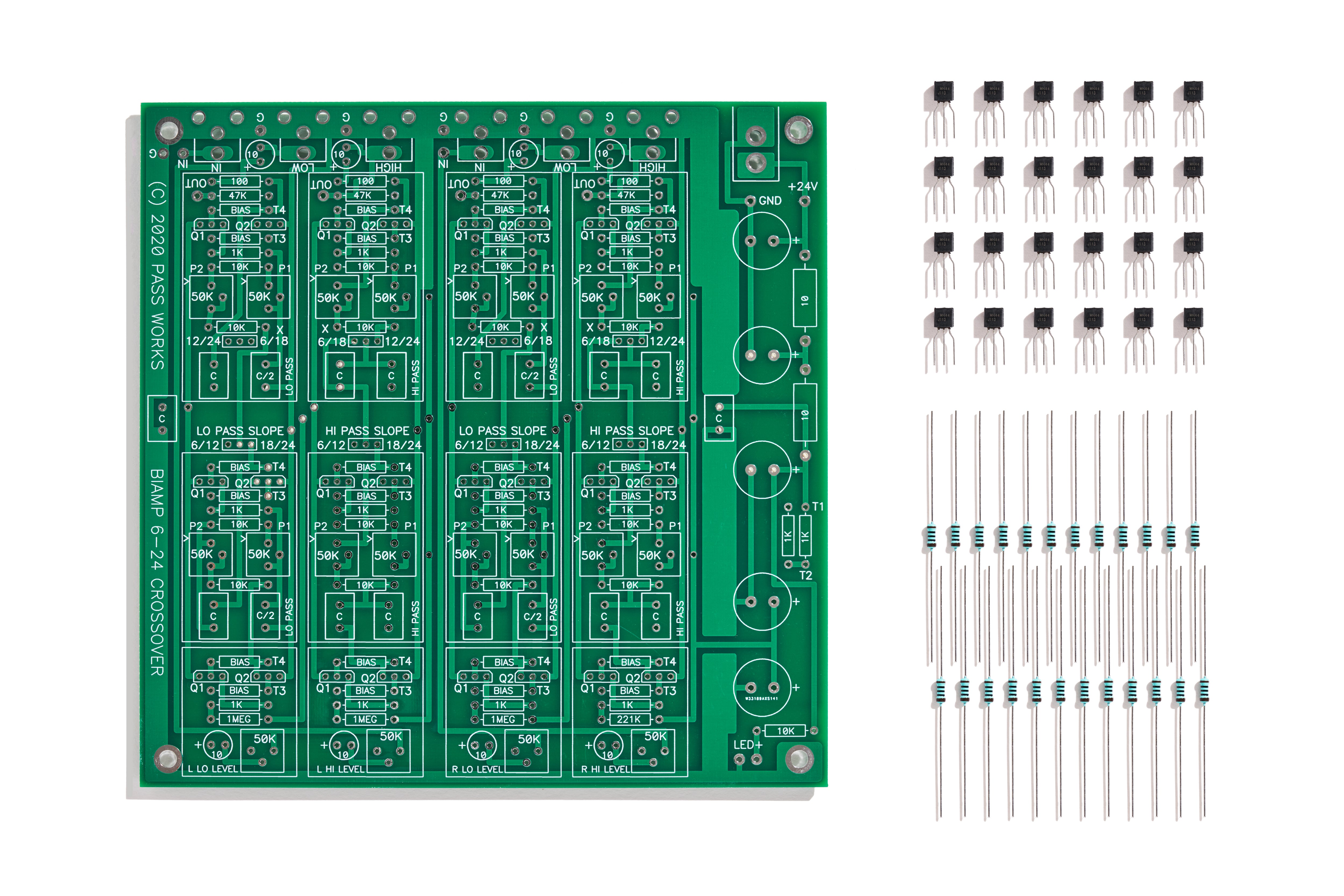
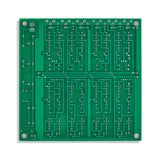
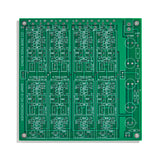
The DIY BIAMP 6-24 kit is a stereo analog active bi-amp crossover circuit designed for high flexibility. Featuring 12 discrete JFET buffer circuits operated without negative feedback, it offers 16 continuously adjustable filter elements in two low-pass and two high-pass filters with slopes of 6, 12, 18, or 24 dB per octave and various “Q” characteristics. It has flexibility not generally offered by crossover products have “textbook” characteristics, allowing more detailed tailoring of filters around the actual character of different loudspeaker drivers.
Included
- PCB
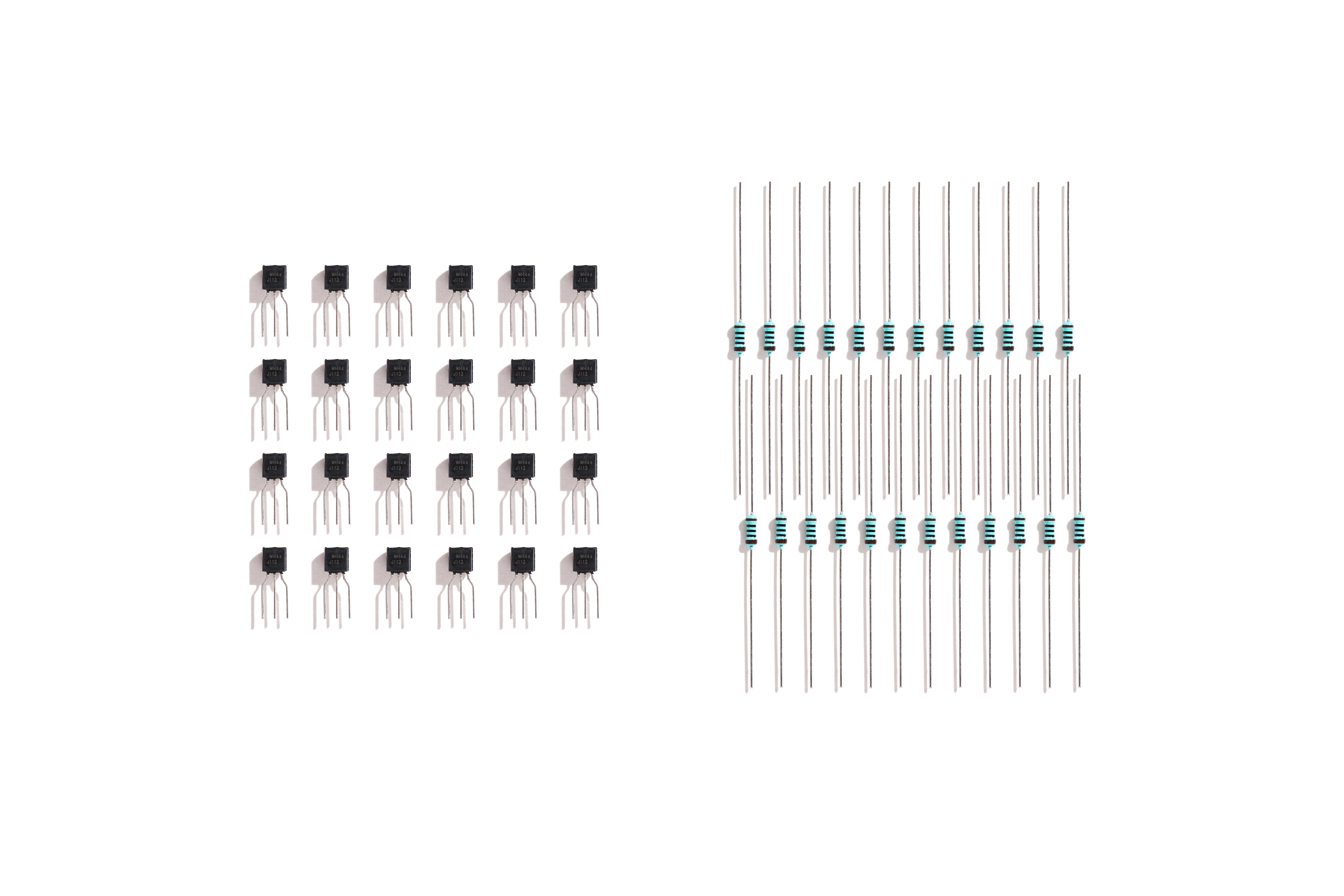
- 24 JFETs (selected for Idss and matched for optimal performance)
- 24 biasing resistors (matched to the JFETs for optimal performance)
Links
-
DIY Biamp 6-24 discussion thread on diyAudio
-
DIY Biamp 6-24 article on First Watt
- Build Guide by 6L6
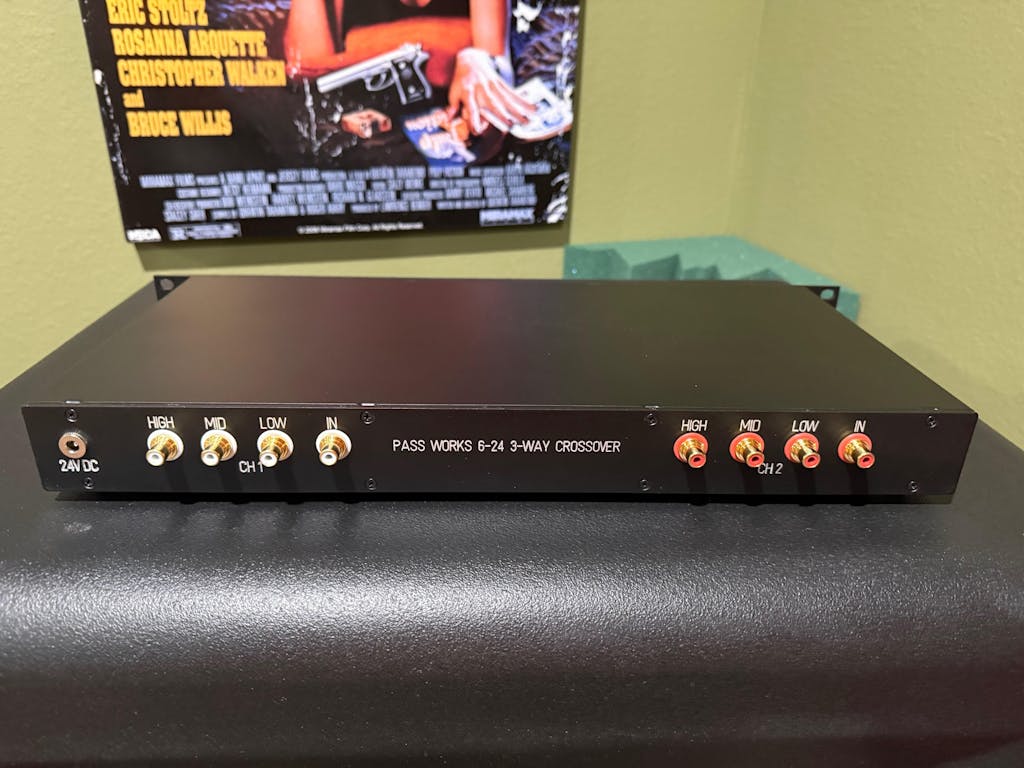
Photography by Thuss and Farrell.
DIY Biamp 6-24 Crossover
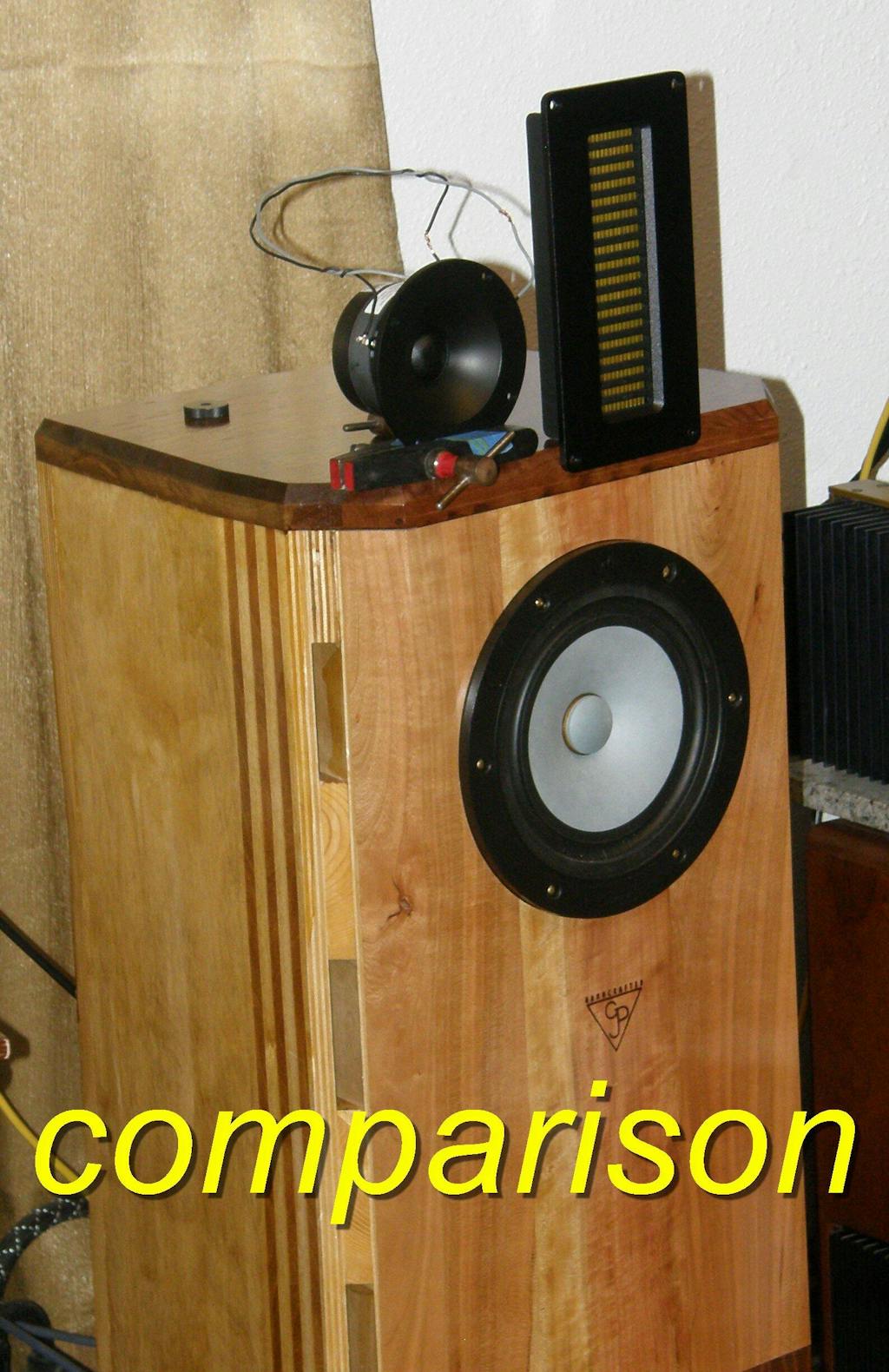
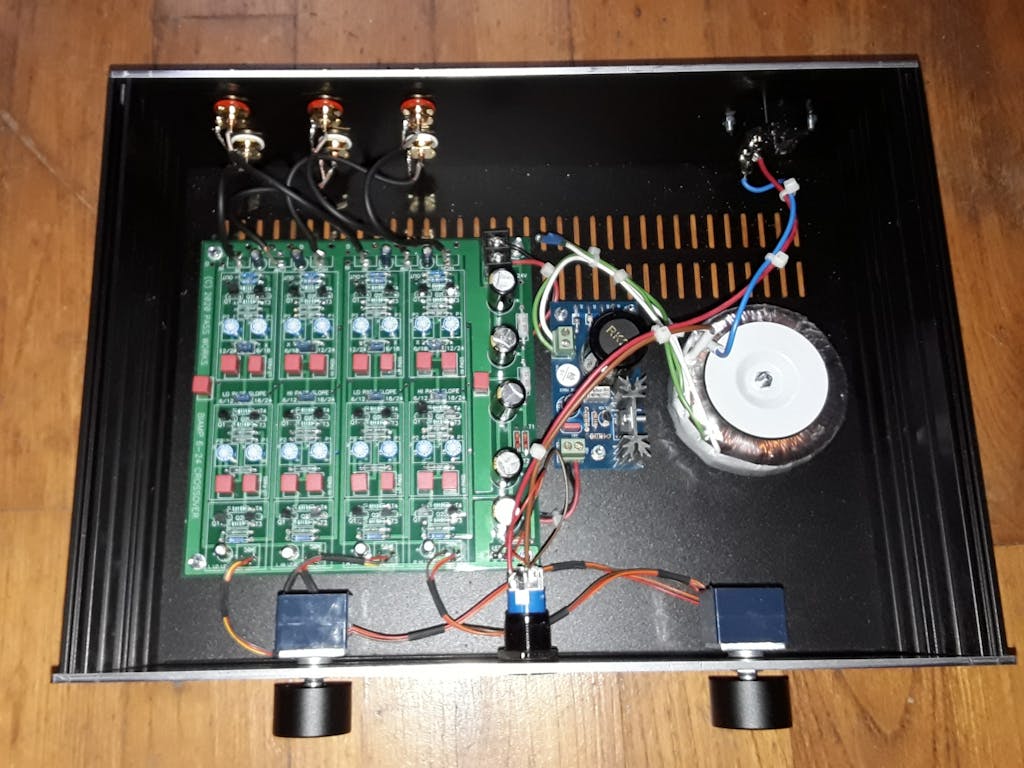
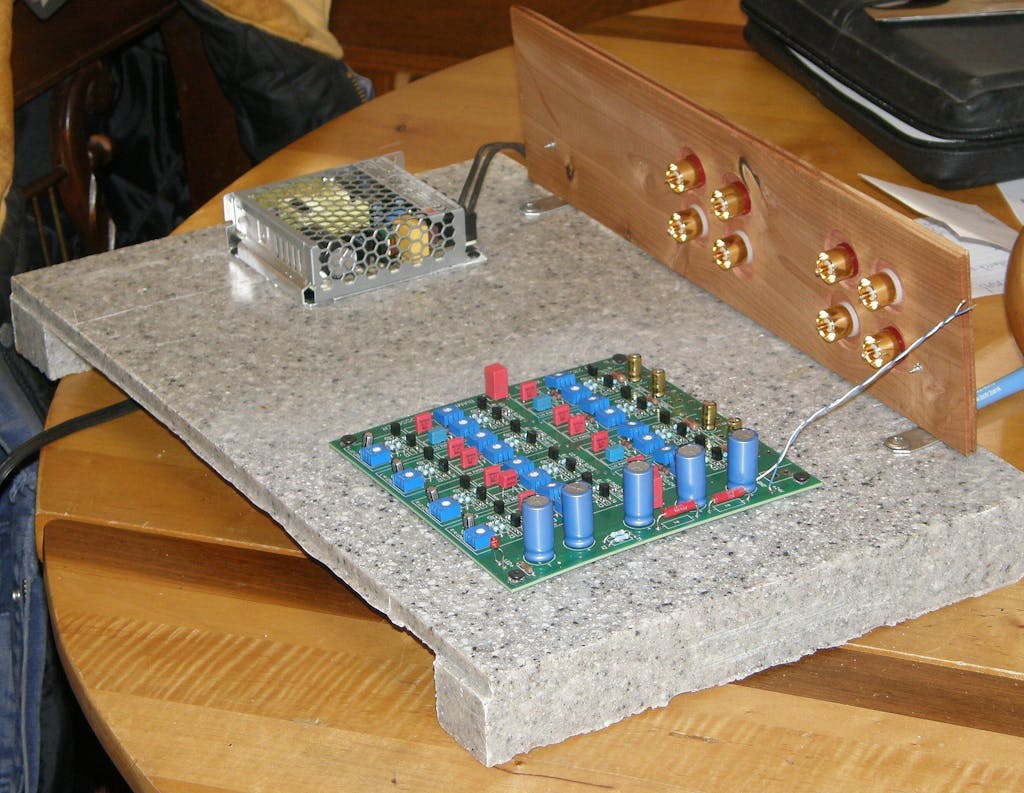
I needed help with a set of speakers, rightly blending them as best as possible. I saw this opportunity and knew that it gave me the best chance of doing so. The build was simpler than I imagined, so that is good, but there is a lot to know beyond the build and I am finding that even though I can do some of this by ear, I will need equipment to make it sure. At the moment the unit is in mule stage, but will be easy to mount it all in a chassis and make pretty. This choice of bi-amping is the best results that I have had so far with speaker building. FWIW, I did a sort of comparison as to the drivers that I might use, and ended up with a set of AMT4 ribbons that I can't tear away from.
Pretty easy build. Sounds great. Flexible.
It would be very difficult to dial this in by ear in my opinion. I used REW, and it took several hours of measuring and listening to get the crossover points, and levels dialed in. Also, as others have mentioned, the pots are very sensitive to adjustment, especially for level matching.
It is very quiet. I'm using it with a compression driver with a sensitivity of 113db, and I can't hear any audible hiss from the system unless I stick my ear in the horn.
Two boards were used for tri-amp crossover; low pass, bandpass, and high pass. What I am hearing is its excellence at what it doesn’t do, no sonic signature or smearing that can be experienced even with well implemented op amps. It performs its function divided audio frequencies to amps without adding or subtracting information from signal. Really happy with this xo.
This was my first successfully complete kit. It was very easy to assemble and provided a great learning experience. The success inspired me two try building the amp camp preamp. That was a successful project also. I have mounted them both on the bottom plate of chassis hat I’m modifying to enclose and protect them from curious fingers. After the chassis is done I’ll be looking for another project. This has been and fun and truly rewarding experience.
Using Nelson's 6-24 active crossover to biamp a system offers one of the biggest "bang for your buck" improvements available. While it took a fair amount of trial and error to adjust it to best suit my listening room, I now have a system that sounds like the best systems I've heard at audio shows, costing tens of thousands of dollars! If you were to buy a commercial active crossover of this quality, it alone would likely cost over a thousand dollars. Thanks Nelson and the DIYAUDIO team!!!
- Related products
- Recently viewed